फीचर
All About the Crested Caracara: Facts, Images, and a Full Species Guide
The crested caracara is one of the world’s most unusual birds of prey. As a member of the falcon family, it stands out thanks to its eye-catching appearance and its habit of hunting on the ground. Native to the open landscapes of the Americas from the southernmost parts of the United States down to South America, this raptor is easy to spot with its black-and-white body, bright orange face, and long legs. The adaptable crested caracara is both a fearsome hunter and a scavenger; you’ll often see it striding confidently across the ground or soaring gracefully through the sky in search of its next meal.
Lucas Gray
संपादकीय डेस्क
संपादक की टिप्पणी
पूरा लेख नीचे जारी है।
सेक्शन
समाज और ट्रेंड
The crested caracara is one of the world’s most unusual birds of prey. As a member of the falcon family, it stands out thanks to its eye-catching appearance and its habit of hunting on the ground. Native to the open landscapes of the Americas from the southernmost parts of the United States down to South America, this raptor is easy to spot with its black-and-white body, bright orange face, and long legs. The adaptable crested caracara is both a fearsome hunter and a scavenger; you’ll often see it striding confidently across the ground or soaring gracefully through the sky in search of its next meal.
What is a Crested Caracara?
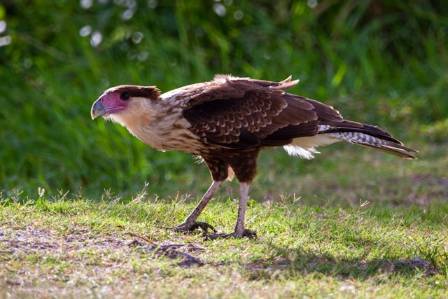
The crested caracara, scientifically named Caracara plancus, is a distinctive raptor. It has a mix of black and white feathers, paired with a bold orange face and striking yellow legs. Even though it belongs to the falcon family (Falconidae), it’s often mistaken for a vulture because it scavenges for food.
Native to wetlands, grasslands, scrublands, and other open habitats across the Americas, the crested caracara’s range stretches from the southern United States, through Central America, and all the way down to South America.
Unlike many of its falcon relatives who spend most of their time dominating the skies, the crested caracara is just as comfortable on the ground. It will often chase after prey while walking on foot.
The crested caracara has a broad diet, including both carrion (dead animals) and small creatures it catches itself. This diverse and flexible feeding behavior lets it thrive in different environments: from the dry landscapes of the American Southwest to the wetlands of Florida and the vast grasslands of South America.
Crested Caracara Identification
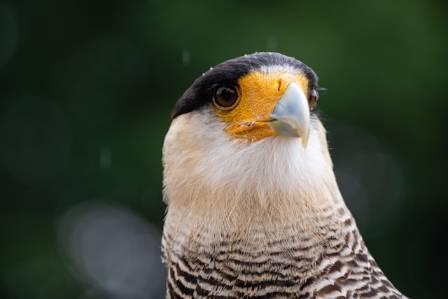
With its large size, hooked beak, and habit of eating carrion, the crested caracara might look like a vulture at first glance. But when you get a clear view, it’s easy to tell apart: it has contrasting black-and-white body feathers, a yellow-orange face, and long yellow legs.
Most of the crested caracara’s body is black or dark brown, while its neck and underparts are white to cream-colored. The neck and chest have black barring against the white background, giving the bird a “necklace” look.
One of its most striking features is its bald, yellow-orange face. On top of its head, there’s a tuft of longer black feathers, the “crest” that gives the species its name. The caracara’s eyes are amber-colored.
Like other birds of prey, the crested caracara has a strong beak, with a slight hook at the tip—perfect for tearing into its varied food. Its long yellow legs and taloned feet are ideal for walking and running on the ground to catch prey.
When flying, the crested caracara has a wide wingspan and a relatively short, squared-off tail. Its body and most of its wings are black, while its neck, tail, and wingtips are white.
The crested caracara is the second-heaviest member of the falcon family (only the gyrfalcon is heavier).
Juvenile crested caracaras have mostly brown feathers, which is different from the sharp black-and-white plumage of adults. Their underparts may be mottled or streaked, rather than having the clear barring and contrast seen in mature birds. Their faces, beaks, and legs are also paler and duller than those of adult caracaras.
Where are Crested Caracaras Found?
The crested caracara has a wide distribution across the Americas. Its range includes:
United States: In the U.S., the crested caracara is mainly found in the southern states, especially Florida, Texas, and Arizona. This area marks the northernmost edge of its overall range.
Mexico: The bird is widespread throughout Mexico, with a strong presence in the central and northern parts of the country.
Central America: It can be found in several Central American nations, such as Belize, Guatemala, Honduras, Nicaragua, Costa Rica, and Panama.
South America: In South America, its range extends from northern countries like Colombia and Venezuela down through Brazil, reaching as far south as northern Argentina and Uruguay. The bird is particularly common in the open habitats of the llanos (grasslands) and cerrado (savanna-like regions).
Habitat
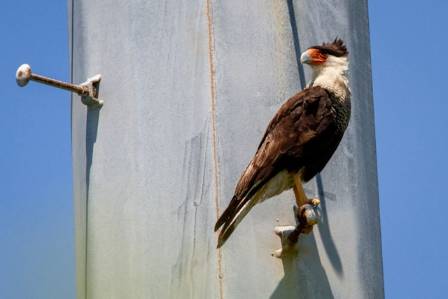
The crested caracara prefers open or semi-open landscapes, such as savannas, grasslands, marshes, and pastures. It can also be found in scrubby woodlands, and sometimes even in more urban areas or near roadsides—places where food might be easy to find.
Crested Caracara Diet
The crested caracara is an opportunistic feeder, meaning it takes advantage of whatever food is available. Its diet is versatile and includes both hunted and scavenged items. Here are the main components of what it eats:
Carrion: One of the crested caracara’s primary food sources is carrion. It’s often seen feeding on animals that have been hit by cars or other dead wildlife, making the most of easy meals whenever they’re available.
Small animals: The caracara hunts and eats a variety of small creatures, including rodents like mice and rats, small birds, amphibians, and reptiles such as lizards and snakes.
Insects: Insects—especially large ones like grasshoppers, beetles, and crickets—are part of its diet, particularly when other food sources are scarce.
Fish: Occasionally, the crested caracara may catch and eat fish from shallow water.
Bird Eggs and Nestlings: The caracara is known to raid bird nests to eat eggs or young nestlings, showing just how opportunistic it can be.
Fruits and Plants: Though it’s mostly carnivorous, the caracara sometimes eats plant matter, especially fruits to complement its diet.
Crested Caracara Family And Related Species
The crested caracara is the second-heaviest member of the falcon family (Falconidae), which currently includes 65 recognized species. (The largest falcon is the gyrfalcon.)
The crested caracara is the only living member of the genus Caracara. In the past, the northern crested caracara and southern crested caracara were classified as separate species: Caracara cheriway and Caracara plancus, respectively. Now, they are considered subspecies of a single species: Caracara plancus.
Crested Caracara Life Cycle & Lifespan
Female crested caracaras usually lay 2 eggs per clutch. The nest—often built in a tall tree or cactus, though sometimes on the ground—is typically over 0.6 meters (2 feet) in diameter. The same pair of caracaras may use this nest year after year.
Mated pairs stay together for multiple years and are highly territorial. They even show aggression toward larger birds, like vultures, that enter their territory.
Both parents help incubate the eggs, though the female takes on most of this responsibility. The incubation period lasts about 28 to 32 days, and the time it takes for chicks to fledge (leave the nest) is 6 to 8 weeks.
Crested caracaras reach sexual maturity around 3 to 4 years of age. As they grow into adults, their plumage changes to the characteristic black-and-white pattern, and they undergo other physical changes like brighter facial skin and a shift in eye color.
Once mature, crested caracaras often form monogamous breeding pairs. These pairs perform courtship displays, which may include aerial moves, vocalizations, and mutual preening (grooming each other’s feathers). Together, they raise their young, and the life cycle begins again.
Is the Crested Caracara Endangered?
The crested caracara is not an endangered species. Its current IUCN (International Union for Conservation of Nature) rating, last updated in September 2023, is “Least Concern,” meaning it is not at significant risk of extinction in the wild.
Conclusion
The crested caracara is a truly unique bird of prey, blending the traits of falcons with behaviors more often associated with vultures. Its striking appearance from its black-and-white plumage to its bright orange face—makes it easy to spot, while its adaptability lets it thrive across a wide range of habitats in the Americas. Whether scavenging for carrion, hunting small prey on foot, or raising its young in a reused nest, the crested caracara showcases remarkable flexibility. Though it’s not currently endangered, protecting its open habitat from grasslands to wetlands, will be key to ensuring this unusual raptor remains a common sight across its range for years to come. For birdwatchers and wildlife enthusiasts alike, the crested caracara is a fascinating species that highlights the diversity of nature’s hunters.
संबंधित कहानियाँ
A hidden village carved into a cliff
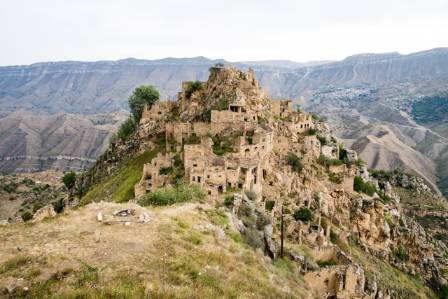
About 195km southwest of Muscat’s sandy coastline, Oman’s dry plains gradually rise toward the limestone mountains of Jabal al Akhdar, a 2,980m-high massif whose name means “Green Mountain.” The region is made up of winding valleys, rugged slopes and dramatic gorges. It remains one of Oman’s most secluded areas, and once the paved road disappears, travelers must continue by foot, mule or four-wheel-drive vehicle.
और पढ़ें »
हमारे रेनडियर – फ़िनलैंड में रेनडियर के बारे में जानें
रेनडियर गर्व से खड़े होते हैं, उनके सींग ऊँचे होते हैं, जो बर्फ़ में ध्यान खींचते हैं
और पढ़ें »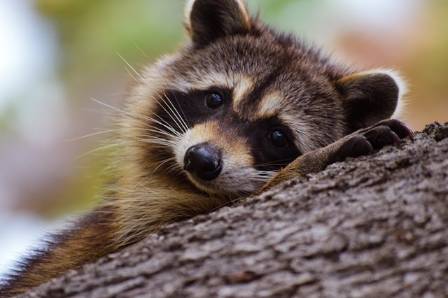
रैकून: नकाबपोश रात्रिचर घुमक्कड़
रैकून अपने चेहरे पर बने विशिष्ट निशानों के कारण तुरंत पहचाने जाते हैं। उनकी सबसे प्रमुख विशेषता उनका काला “मुखौटा” है, जो नाक से लेकर निचले गालों तक प्रत्येक आँख के चारों ओर फैला होता है। उनकी आँखों के ऊपर और नाक के आसपास हल्के, सफ़ेद-से धब्बे भी होते हैं। उनके शरीर का अधिकांश हिस्सा धूसर-भूरे फर से ढका होता है, और उनकी घनी पूँछों पर चार से छह गहरे छल्ले होते हैं।
और पढ़ें »
Oriental Pearl Tower
Standing at 468 meters tall, the Shanghai Oriental Pearl TV Tower is one of the most famous landmarks in Shanghai. It ranks as the fourth tallest tower in Asia and the sixth tallest tower of its kind in the world. Construction began on July 30, 1991, and the tower was officially completed on October 1, 1994.
और पढ़ें »
अब तक के 13 सबसे अच्छे डोनट्स, रैंकिंग
फ्राइड आटा कई तरह से स्वादिष्ट होता है, लेकिन यह बेकर्स डज़न सबसे अच्छा है।
और पढ़ें »
Top Destinations for Witnessing the Northern Lights
Top Destinations for Witnessing the Northern Lights
और पढ़ें »