फीचर
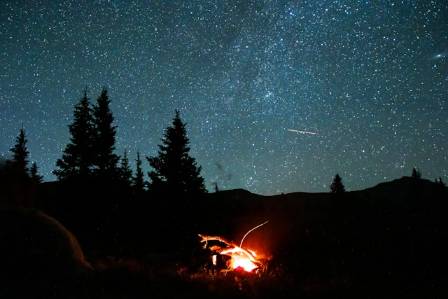
Stargazing on Bonfire Night
Every year, there is one evening when people are almost certain to leave their televisions behind and venture outside after dark: 5 November, Bonfire Night.
Oscar Waverly
संपादकीय डेस्क
संपादक की टिप्पणी
पूरा लेख नीचे जारी है।
सेक्शन
समाज और ट्रेंड
Every year, there is one evening when people are almost certain to leave their televisions behind and venture outside after dark: 5 November, Bonfire Night.
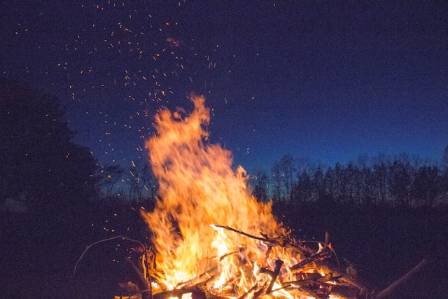
As night arrives, some families stay at home and set off a few fireworks in their gardens, while others gather in parks or sports grounds to enjoy the warmth of a bonfire and watch spectacular fireworks displays.
However, fireworks are only part of what can be enjoyed on Bonfire Night. If the skies are clear, there is an entirely different show taking place overhead. During quieter moments between fireworks, simply looking upward can reveal a variety of fascinating sights in the night sky.
How to Stargaze on Bonfire Night
Stargazing requires plenty of time spent standing still, so staying warm is essential. Put on a suitable jacket and remember to bring a hat and gloves.
If you plan to take this guide outside with you while searching for the objects described here, changing your phone display to red can help protect your night-adapted eyesight.
All of the celestial objects mentioned in this guide can be observed without optical equipment, but binoculars are worth bringing if you have a pair available.
Binoculars can make bright objects appear more distinct, bring out additional colour, and make dimmer targets easier to locate when smoke or haze affects the sky.
Even if you are concerned that Bonfire Night may not seem like the ideal time for astronomy because of all the extra smoke and haze, it is still worth stepping outside. Clear evenings are uncommon, so whenever the sky cooperates, it is worth making the most of the opportunity.
There is also a particularly nostalgic quality to stargazing on Bonfire Night, as the experience can bring back memories from childhood.
I saw Halley’s Comet for the first time on Bonfire Night in 1985. I remember looking through my binoculars while smoke swirled around me almost like I was standing on a battlefield. At the time, the comet looked little more than a blurred star positioned near the Hyades.
Once you are ready to head outside, here is what you can look for as Bonfire Night progresses.
6pm: Jupiter, Saturn and Venus
As the evening’s first fireworks begin exploding overhead, look toward the southern sky and you should notice two bright star-like objects positioned fairly close together.
These are not stars but the planets Jupiter and Saturn. Although they appear near each other from our viewpoint, the two enormous worlds are actually separated from one another, as well as from Earth, by vast distances.
The brighter object on the left is Jupiter, the largest planet in our Solar System. It is an enormous world made primarily of gases and liquids, so large that roughly 1,000 Earths could fit inside it with space remaining.
NASA’s Juno spacecraft has been returning spectacular views of Jupiter, revealing its swirling cloud bands and strange-looking storm systems. These images can also be viewed online for free through the Juno mission website.
Saturn appears fainter and slightly lower right of Jupiter, with a yellowish appearance. The planet is famous for its magnificent rings, although you will need a telescope to see them properly.
If you have an unobstructed view toward the southwest, another planet may also be visible.
Venus will appear very low above the southwestern horizon. It can serve as Bonfire Night’s bright “Evening Star,” although buildings and trees along the horizon may easily block it from view.
7pm: Summer Triangle, Cassiopeia, Andromeda Galaxy and the Milky Way
By around 7pm, your eyes should have adjusted more fully to the darkness. Even with the flashes and glow of fireworks overhead, this improved dark adaptation will allow you to pick out more celestial objects.
One of the easiest patterns to notice is a large triangle formed by three bright blue-white stars located high above Jupiter and Saturn.
This pattern is not technically a constellation. Instead, it is an asterism, meaning a recognizable arrangement of stars. Known as the Summer Triangle, it remains visible even during November.
The three stars forming the Summer Triangle are Deneb, also known as Alpha Cygni, Vega or Alpha Lyrae, and Altair or Alpha Aquilae. They are the brightest stars in Cygnus, the Swan, Lyra, the Lyre, and Aquila, the Eagle, respectively.
After locating the Summer Triangle, turn your attention higher toward the southeast, where you should be able to find a distinctive W-shaped arrangement of stars.
This is Cassiopeia, the Queen. Its recognizable shape can be used as a guide toward one of the most impressive objects visible from Earth: the Andromeda Galaxy, or M31.
M31 contains billions upon billions of stars, and its light has traveled for more than two million years before reaching us.
Through telescopes and long-exposure photography, the Andromeda Galaxy appears as an elongated, lens-shaped mass filled with stars and crossed by dark lanes of dust. To the unaided eye, however, it looks like little more than a faint patch of light.
If Bonfire Night smoke fills the sky, binoculars may be necessary to pick it out. Even so, understanding what that faint smudge actually represents is part of what makes finding it so rewarding.
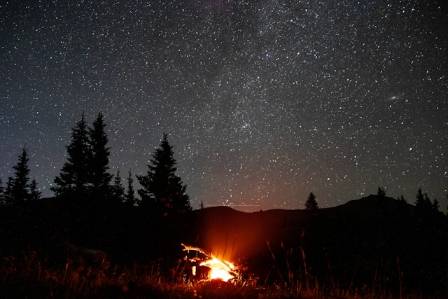
On a clear evening away from significant light pollution, you may also be able to see the pale band of the Milky Way rising from the western horizon.
The Milky Way appears as a broad, hazy stream of combined starlight created by billions of stars within our own Galaxy. Because you are viewing it from inside the Galaxy, its appearance can almost resemble a trail of smoke stretching across the sky, echoing the smoke rising from a distant bonfire.
7:30pm: Taurus, Pleiades and Hyades
By the middle of the evening, Taurus, the Bull, will be climbing into the eastern sky.
The constellation is relatively easy to identify because two prominent star clusters dominate the area and can both be seen without optical equipment.
The most immediately noticeable of the pair is the Pleiades star cluster.
Look toward the east and you should see a compact group of icy blue stars relatively low above the horizon. From arm’s length, the cluster appears approximately the size of your thumbnail. This small concentration of stars is the Pleiades.
The Pleiades contains hundreds of stars, but around the world it is widely known as the Seven Sisters because its seven brightest members can be seen with the naked eye. Together, they resemble a small, compressed version of the Plough.
Approximately halfway between the eastern horizon and the Pleiades, you will find a conspicuously orange star.
This is Aldebaran, or Alpha Tauri, traditionally known as the Eye of the Bull. If the sky is sufficiently dark, you will notice that Aldebaran sits at one end of a sideways V-shaped arrangement of stars.
This distinctive pattern is the Hyades star cluster, another favourite among stargazers. The Hyades is considerably larger than the nearby Pleiades and forms the horns of Taurus.
8pm: The Plough, Mizar and Alcor, and Polaris
By 8pm, Bonfire Night celebrations should be in full swing. As fireworks streak upward, turn toward the north and look for the stars forming the Plough, also known as the Big Dipper, above the horizon.
November is an excellent time to observe this familiar asterism. The Plough forms part of the larger constellation Ursa Major, the Great Bear, and its evening orientation makes it resemble the saucepan shape that many people affectionately associate with it.
Observers with good eyesight may notice that the star located in the middle of the Plough’s handle is not actually a single star.
Instead, it is a pair of stars positioned close together. This well-known double star is made up of Mizar and Alcor.
The Plough also contains another useful pair of stars known as the Pointers, Merak and Dubhe. These stars can help you find Polaris, the North Star, making the Plough a particularly useful pattern for navigating the northern night sky.
संबंधित कहानियाँ

खरीदने से पहले जानने योग्य बेहतरीन विंटेज स्पोर्ट्स कारें
क्लासिक स्पोर्ट्स कारों का एक अनोखा आकर्षण होता है, जिसकी बराबरी आधुनिक वाहन अक्सर नहीं कर पाते। उनका डिज़ाइन, इतिहास और ड्राइविंग अनुभव आज भी दुनिया भर के कलेक्टरों और उत्साही लोगों को आकर्षित करता है। यदि आपने कभी इन कालजयी मशीनों में से किसी एक को अपना बनाने पर विचार किया है, तो यह समझना आवश्यक है कि उन्हें खास क्या बनाता है—और खरीदने से पहले किन बातों पर ध्यान देना चाहिए।
और पढ़ें »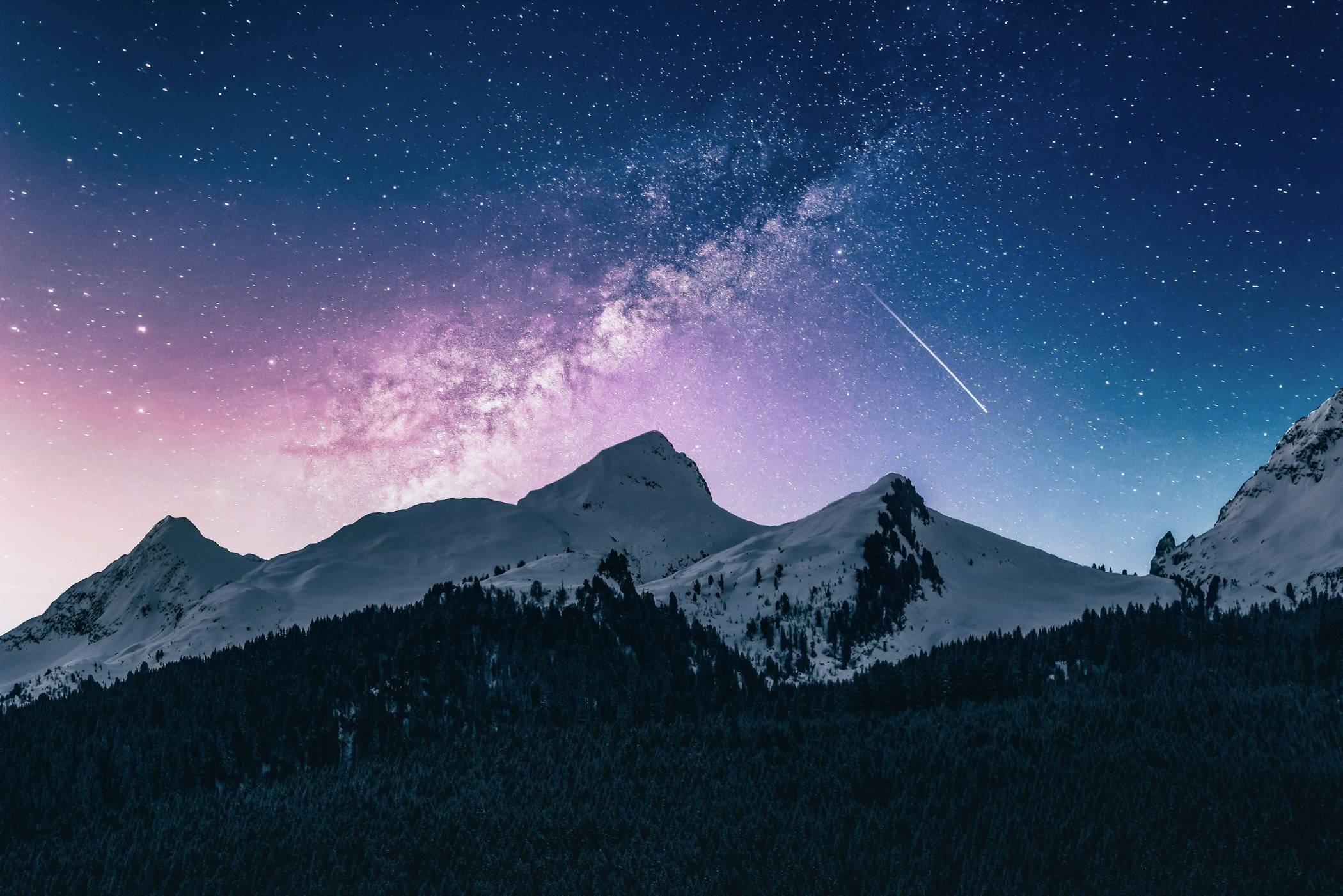
पृथ्वी से मिल्की वे कैसे देखें: सभी जानकारी
तारे सबसे सुंदर चीजों में से एक हैं जो हमेशा मानव आंख को आकर्षित करते हैं। जिन लोगों ने आकाश में मिल्की वे देखा है, वे लंबे समय तक इस सुंदर दृश्य को नहीं भूल सकते। यह एक ऐसा सुंदर दृश्य है जो कट्टर संशयवादियों को भी प्रभावित कर देगा। रात में ली गई तस्वीरें लुभावनी होती हैं। वे आकर्षक और रहस्यमय लगती हैं, इसलिए कई महत्वाकांक्षी फोटोग्राफर उन्हें जितनी बार संभव हो लेने की कोशिश करते हैं। रात में मिल्की वे विशेष रूप से सुंदर लगती है। लेकिन कभी-कभी इसे ढूंढना मुश्किल होता है, खासकर उन लोगों के लिए जिन्होंने इसे कभी नहीं देखा है। क्या आपको लगता है कि यदि आपके पास अनुभव नहीं है तो आप इसे नहीं देख सकते? इस लेख में, हम साबित करेंगे कि न केवल खगोलविद इस तारों के समूह को ढूंढ सकते हैं, बल्कि हम आपको यह भी बताएंगे कि मिल्की वे कैसे देखें।
और पढ़ें »
किसी भी अवसर के लिए सरल चीनी स्टिर-फ्राई रेसिपी
स्वादिष्ट चाइनीज़ स्टिर-फ्राई व्यंजन पौष्टिक और पेट भरने वाले पारिवारिक रात्रिभोज के लिए बेहतरीन विकल्प हैं। ये रेसिपी व्यस्त दिनचर्या के लिए विशेष रूप से उपयुक्त हैं, क्योंकि इनमें से अधिकांश 30 मिनट से भी कम समय में तैयार हो जाती हैं। ताज़ी सब्जियों और अपनी पसंद के प्रोटीन को रसोई में मौजूद सामग्री से बने सॉस के साथ मिलाकर, नौसिखिया रसोइये भी रेस्तरां के पसंदीदा व्यंजनों को टक्कर देने वाला उच्च गुणवत्ता वाला भोजन बना सकते हैं।
और पढ़ें »
दुनिया की 3 सबसे खूबसूरत तटरेखाएँ
यात्रा के बारे में मेरी पसंदीदा चीजों में से एक है दुनिया भर में विभिन्न अद्भुत दृश्यों की खोज करना। जब खूबसूरत दृश्यों की बात होती है, तो कुछ सबसे अद्भुत दृश्य दुनिया के सबसे सुंदर तटों के साथ मिलते हैं।
और पढ़ें »
the most crucial moments of Driving on Rural Roads
One crucial consideration when navigating country roads is to avoid exceeding the range of your headlights, especially on less-traveled routes like rural blacktops. Your speed should be dictated by your visibility rather than the posted speed limit.
और पढ़ें »
प्राचीन कलाकृतियाँ आधुनिक वास्तुकला को कैसे प्रेरित कर सकती हैं
हर प्राचीन कलाकृति में एक कहानी होती है। एक ऐसी सभ्यता की कहानी जिसकी अर्थव्यवस्था कभी जीवंत थी और सौंदर्यबोध पैदा करते हुए समस्याओं को हल करने की सरलता।
और पढ़ें »